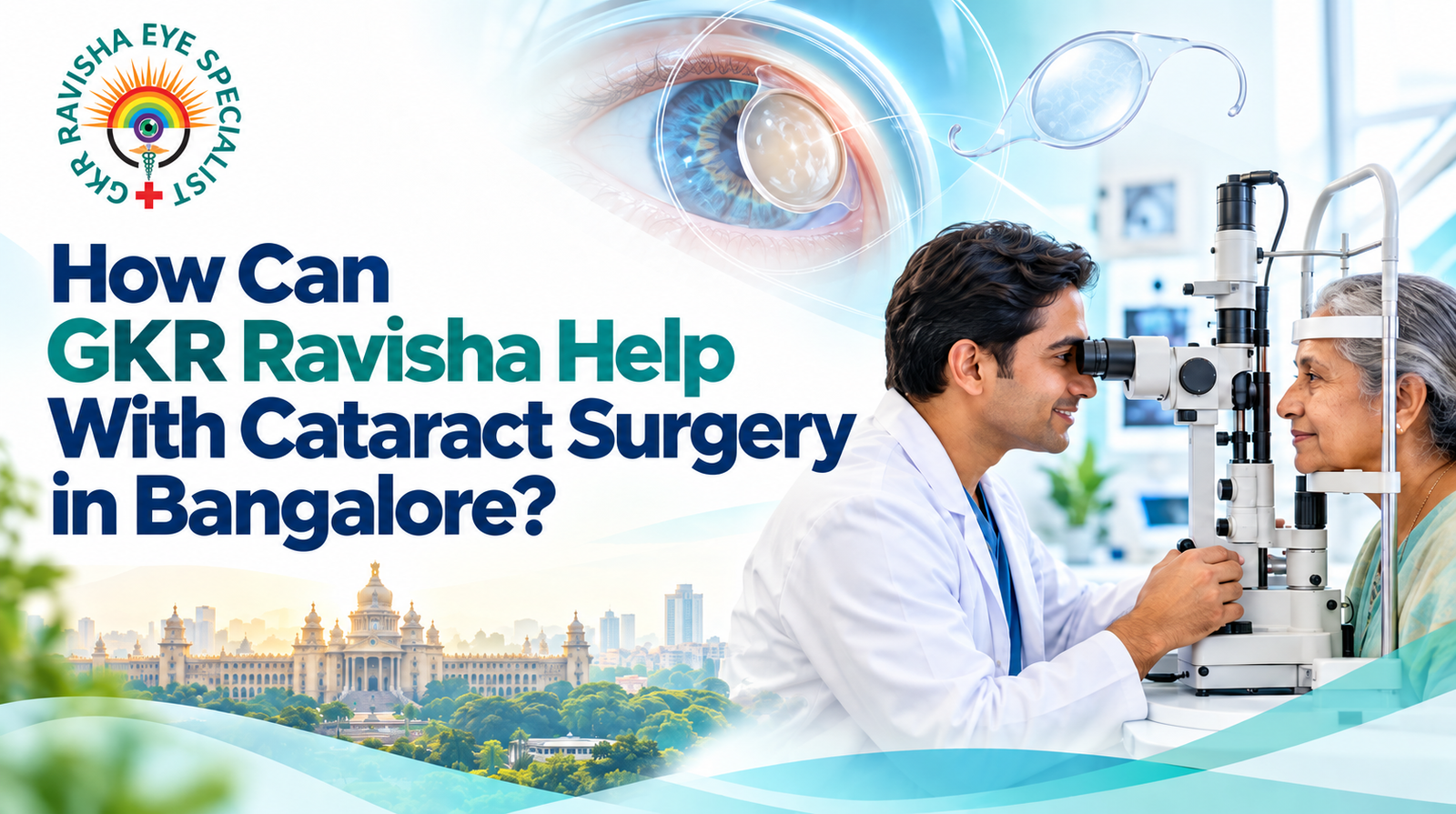
Are you wondering, “How Can GKR Ravisha Help With Cataract Surgery in Bangalore?”. GKR Ravisha can assist you with eye examination, cataract evaluation, consultation regarding the surgery, lens calculation, and post-operative management. Cataract surgery involves replacement of the clouded natural lens by an artificial intraocular lens (IOL). In an Eye Care Hospital, surgery will depend on the level of interference of the cataract with your life and general ocular well-being.
What is a cataract, and when does it need surgery?
Cataract refers to clouding of the natural lens of the eye. It causes blurring of vision, glare, fading colors, and difficulties in driving during nights.
Not all cataracts require surgery immediately. Surgery is recommended when the cataract impairs daily activities such as reading, driving and working. Glasses can help temporarily in case the symptoms are mild, but only surgery can get rid of a cataract.
How can GKR Ravisha assess whether surgery is right for you?
Eye examination precedes any other consideration. Your eye doctor evaluates your vision, the cataract itself, your eye pressure, cornea and retina if possible and takes measurements necessary for calculation of the artificial lens.
The official GKR Ravisha Eye Clinic website mentions the cataract examination and surgery, retina diseases, and diabetic retinopathy treatment.
What happens before cataract surgery?
Featured Snippet Answer: Prior to cataract surgery, the ophthalmologist ensures the cataract influences the vision, examines the presence of other diseases of the eye and measures it to install an artificial lens. This consultation should also include discussion of potential risks, medications, recovery process and possible limitations due to other eye problems.
What happens during cataract surgery?
Current cataract surgeries involve the removal of the natural lens that became cloudy due to the condition and its replacement with a clear IOL. Most often, this surgery is carried out under local anaesthesia.
Ultrasound might be required in order to break the cloudy lens and remove it. Cataract surgery is usually a day surgery procedure when the patient returns home on the same day.
Your surgeon should advise you about your lens options depending on measurements, existing eye diseases, and personal requirements for vision correction.
Why can a retina check matter before cataract surgery?
Cataracts are not the only cause of poor eyesight. Diabetic, glaucomatous, macular diseases, or retinal disorders might also influence the end result.
Individuals with diabetes, flashes, floaters, pre-existing retinal condition, or unknown causes of reduced vision should be assessed further. GKR Ravisha provides services of retinal and diabetic retinopathy specialists, which could come handy in case of cataract treatment requiring Retina Specialist in Marathahalli.
What should you ask when choosing an Eye Hospital?
Don’t limit yourself to statements like “Best Eye Clinic” or “Best Eye Doctor.” Ask practical questions instead. Who will conduct your surgery? What diagnostic methods are involved? What lens options are available for you? What risks are involved? What follow-up procedures will be performed?
Generally, cataract surgery is quite successful, but there can be some complications. Good Eye Care involves disclosure of risks before signing a consent form. Complications could be related to infection, inflammation, retinal problems, and complications associated with implantation of artificial lenses.
What is recovery usually like?
Your vision could be blurred at the beginning, but it generally improves during the following days or weeks. Follow prescription regarding eye drops and eye protection.
Obey your surgeon’s recommendations regarding driving, exercising, lifting weights, bathing, and eye protection. Sudden pain, increasing redness, worsening of vision, flashes or floaters, and curtain-like shadow require immediate medical assistance.
Is GKR Ravisha convenient for patients around Marathahalli?
According to Google Maps, GKR Ravisha Eye Clinic is located at 28, Munnekollal Main Road, adjacent to Marathahalli Bridge, Rajasree Layout, Bengaluru 560037. This could be a very accessible location for those coming from Munnekolala, Bellandur, Varthur, Whitefield, Brookefield, and other eastern parts of Bangalore city.
How Can GKR Ravisha Help With Cataract Surgery in Bangalore?
The services that can be offered by GKR Ravisha include helping the patient find out whether he is suffering from a cataract, deciding whether surgery is required, choosing artificial lenses, checking other conditions of eyes, and coordinating post-surgery procedure. The end result will depend on the outcome of the examination and personal visual requirements of the patient.
Conclusion:
What should you do next?
If you have cataracts that make activities like reading, driving, working, and other daily activities challenging, it is advisable to begin with a complete Eye Checkup at an appropriate Eye Care Hospital. The hospital should clearly explain your situation, possible artificial lenses, benefits, restrictions, and risks.
To get cataract consultation in Marathahalli and nearby places, contact GKR Ravisha Eye Clinic.
Reach Out for More Details
GKR Ravisha Eye Clinic
Address: 28, Munnekollal Main Rd, near Marathahalli Bridge, Rajasree Layout, Marathahalli, Bengaluru, Karnataka 560037
Contact Number: +91 90048 68520
Website: GKR Ravisha Eye Clinic official website
FAQs
Can cataracts be treated without surgery?
No medicine or eye drop has been proven to remove an established cataract. Glasses may help temporarily.
Is cataract surgery painful?
It is usually performed with local anaesthesia, which numbs the eye during the procedure.
Will I need glasses after cataract surgery?
Possibly. It depends on the IOL, eye measurements, astigmatism, and visual goals.
How soon can I return to normal activities?
Recovery varies. Follow your surgeon’s advice about driving, lifting, swimming, and exercise.
What symptoms after surgery need urgent attention?
Severe pain, worsening redness, sudden vision loss, new flashes or floaters, or a dark curtain in the vision need prompt assessment.
Should people with diabetes have extra eye checks?
Often, yes. Diabetes can affect the retina, so retinal assessment may be important around cataract surgery.